Showing posts with label sustainable tourism. Show all posts

Thursday, 6 March 2014

Six Travel Trends that will shape our marketing


SIX TRAVEL TRENDS TO shape our marketing for 2014 and beyond

Six travel trends that are going to shape our marketing in 2014 beyond...


The influence of the ‘millenials’

The Millennials are those born since 2000.  These 18- to 30-year-olds of growing importance to the travel industry and have some key characteristics and will shape the future of travel propositions for the industry. Specifically, the millenials are more ethnically diverse, more interested in urban than resort destinations, more likely to travel to follow interests or activities and more likely to travel with friends in organized groups.


The continuing growth of the Silver market

The Silver market is estimated to comprise 1.3 billion to 1.6 billion people worldwide by 2015. Of crucial importance to this group is customer service. The senior group travels primarily for rest and relaxation on either short or longer stay trips and prefer quieter and less congested destinations. Not only is the senior market the world’s wealthiest group – it is also the most demanding and show very little tolerance to poor or average levels of customer service.


An increase in conspicuous leisure

The ubiquitous use of social media and with it the widespread sharing of photos with friends, families and colleagues – has fostered a trend in conspicuous leisure.  Experiences  will become a ‘social currency’ signalling social status through unique experiences rather than through consumer goods.  These experiences will most likely include owning a holiday home, having the freedom to work from home, taking holidays to exotic destinations and enjoying active experiences

The rise of ‘creative tourism’

Creative tourism is travel that provides an engaged and authentic experience and that can make a connection with those who live and work in the tourism destination.  The ‘creative’ tourist differs from a ‘cultural’ tourist in that he or she is active and interacts with the locals.


The strength of luxury travel

Luxury travel continues to be a robust segment of the travel industry and has remained recession-proof over the last five years as other sectors have struggled.  There are now literally millions of millionaires and the number of affluent households are projected to double between 2012 and 2020. Despite the growth of the Asian (and particularly the Chinese) market, it is still projected that U.S., Japanese and European travellers will dominate the luxury travel market until 2020


The emergence of  multi-generational travel

The older the original baby-boomers get, the more family travel they are doing with a lot of that travel planned around milestone events. The multi-generational market is about trading memories, with convenience and value.

Most destinations have struggled when it comes to providing services and amenities that appeal to six and 60 year-olds alike, but some cruise lines have already taken a leadership position in catering to the multigenerational travel market.


Tuesday, 15 January 2013

Vladimir Raitz - The First Travel Pioneer


Continuing the theme of great travel entrepreneurs, let’s remember a true pioneer of the post-war package holiday industry; Vladimir Raitz.  

In the period from his first  trips to Corsica, Vladimir Raitz built the first, and one of the UK's most respected, holiday companies, Horizon Holidays, overseeing the business until the early 1970s.


Corsica for £32:10s per person and as much wine as you could put away

When Vladimir Raitz launched his business, few people could afford a foreign holiday. A return flight to Nice in 1950 for example, cost £70 (or about £1,700 today).  What Vladimir offered in 1950 was an all-inclusive package holiday to Corsica for £32 10s - including return flight, tented accommodation on the beach "delicious meat-filled meals and as much local wine as [you] could put away".

His first flight, with 11 paying customers looking forward to a week in the sun, took off from Gatwick in May 1950 in a government-surplus Dakota DC3. The plane landed at Lyon to refuel before continuing to Calvi. The whole journey took six hours.

Vladimir later recalled: "When we arrived at Corsica airport, there was nothing at all – not even a little hut. [We had] to shelter from the sun under the wings of the plane while we waited for the bus to pick us up." Once at the beach, the holiday-makers were greeted by large canvas tents, each with two beds. There was an area was set aside for "ablutions", a dining room, bar and dance-floor. "A pastis was a few pence," Raitz said, "a bottle of wine was nine pence."

His company was Horizon Holidays

Horizon Holidays..


Horizon soon added Majorca as a destination, followed by Sardinia, Malaga and Perpignan.  As it expanded, the firm added Tossa de Mar on the Costa Brava, then a small fishing village with a handful of hotels and bars and no bank. Vladimir later regretted the over-development of that part of the Catalan coastline.

None of this was achieved without difficulty. British European Airways objected to his flying to Corsica because it constituted "material diversion of traffic" – despite the fact that they did not fly to the island. And at first he was only allowed to carry teachers and students as all other occupations were banned!

There were also strict government regulations about how much money you could take on an overseas holiday: "At first it was £50, and that was later cut to £25," he recalled. "But we could keep the price of accommodation down to about £15, and the charter flight was payable in sterling, so there was still some spending money left over."

His Early Days in Russia, Berlin and Mill Hill


Vladimir Raitz was born to Jewish middle-class family in Moscow on May 23 1922. His father was a doctor and his mother, Cecilia, a qualified dentist. In 1927 Cecilia left Moscow to join her parents, who had fled to Berlin. She took Vladimir with her and he never saw his father again.

In Berlin he saw the rise of Hitler but in 1936, Vladimir joined his Grandparents in London and went to Mill Hill School. He arrived fluent in Russian, German, Polish and French, but with no English and yet by the end of his first term he was top of the class in that subject. 

Vladimir went on to the London School of Economics, where he read History, then joined the Reuters news agency. Throughout the Second World War he interpreted foreign news broadcasts for Reuters and United Press.

He was still working for Reuters when, in 1949, his grandmother died, leaving him £3,000. He left the agency, using his windfall to establish Horizon Holidays.

He was aware that since the end of the war there had been a surplus of government aircraft which were available for charter. Most were taken up for transporting cargo but Raitz saw a different opportunity, having just been invited by another expatriate Russian to visit Corsica, where the man was running a beachside "holiday camp".

Competition Appears


Even Vladimir could not have foreseen the huge expansion in holiday travel that was to follow his Corsica experiment. Between 1960 and 1967, the number of Britons going abroad soared from 2.25 million a year to 5 million. Horizon became one of the UK's largest operators, spawning Club 18-30, which was, he claimed, simply a holiday company for young people and not as a vehicle for sun, booze and sex that it later became.

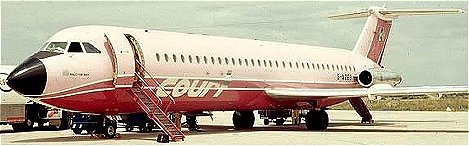
However, the company could not cope with the vicious price war that broke out in the early 1970s, sparked off mainly by the biggest operator, Clarksons. Horizon began to lose money. After a desperate struggle to keep it afloat, the final blow was dealt by the oil price crisis which followed the 1972 Arab-Israeli war. In February 1974 it was taken over by Court Line, Clarksons' parent company. Court Line itself went bust shortly afterwards, owing £7 million to some 100,000 holiday-makers.

The collapse was particularly serious because there were then no proper bonds or protection schemes to safeguard people's holidays against bankruptcy. In the wake of the event, Civil Aviation Authority bonds and the Air Travel Reserve Fund were established.


Later Reflections on the Effects of Package Travel


Vladimir admited to having mixed feelings about the consequences of modern tourism. Benidorm, he noted in 1989, "looks bloody awful now – but that's progress, I suppose". More thoughtfully, he added: "On one hand, I hate to see resorts being despoiled. Take Minorca. There used to be a beach, no road to it, you used to scramble down through the scrub. Today it is ringed with hotels. To that extent, I am sad... On the other hand, I think it's marvellous that 12 or 13 million people can have a Mediterranean holiday and enjoy themselves."

"Providing a fortnight in the Mediterranean sun to a wide segment of the British public, hereto the prerogative of well-to-do members of the bourgeoisie, brought with it what can only be described as a social revolution; the man in the street acquired a taste for wine, for foreign food, started to learn French, Spanish or Italian, made friends in the foreign lands he had visited – in fact became more 'cosmopolitan', with all that that entailed."

And Thomson too..


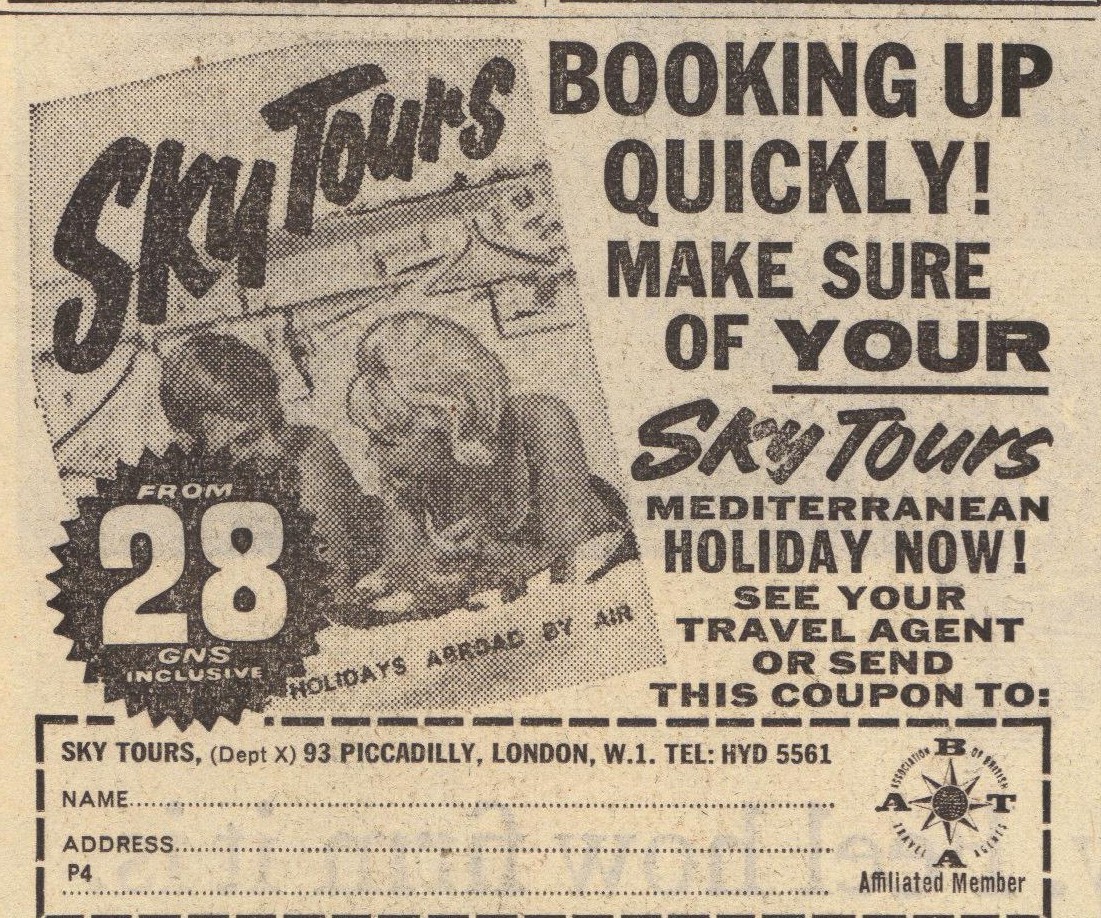
Vladimir remained one of the principal players in the British tour operating business for 25 years. On behalf of Sir Gordon Brunton, of the Thomson organisation, for example, he acquired Skytours and Riviera Holidays, which merged to become Thomson Holidays.

Despite the downfall of Horizon, Raitz remained in the travel industry. During the late 1970s he organised tours for the Maltese Tourist Board where I had the pleasure of working alongside him at Medallion Holidays.

Vladimir Gavrilovich Raitz, entrepreneur, born 23 May 1922; died 31 August 2010

Wednesday, 20 April 2011

Take the train!


I've just returned from a few days business in Edinburgh and as usual I took the train rather than the plane.

I used to enjoy air travel as part of my job but over recent years flying has become more of a chore than a pleasure - regardless of what class you are sitting in!

Far from being herded from holding pen to holding pen, before squeezing into my tiny and uncomfortable seat, the train gave me more space, I was able to work solid for two hours and was able to wander around and stretch my legs, arriving feeling none the worse and ready for business.

So, with the EU suggesting that fewer flights and more train travel is the way of the future it's interesting to see how European train travel compares against the airlines head-to-head.

For the quick hops through the tunnel, only a fool would now choose to travel by air.

The train is not only faster but cheaper. But for further destinations you need to change trains in Paris or Brussels and the journey time and cost increases. For Cologne, Tours, Lyon, Amsterdam and Marseilles, the train takes up to an hour more than the flight.

And even further down the line to Geneva or Bordeaux the journey time by plane is at least two and a half hours faster with return fares about £20 lower.

If the EU is serious about encouraging railtravel as a sustainable policy for future European travel, then they need to look at the fare structures of the rail networks and low cost airlines to achieve some parity.

Fares quoted are the cheapest returns advertised by Eurostar, and the cheapest returns offered from London airports drawn from a search on www.skyscanner.net.

This comparison was made in todays Telegraph.


TRAIN
How long?

How much?
PLANE
How long?

How much?

Brussels
2hr 40m (1hr 55m*)
£69
4hr 20m (1hr 10m**)
£153 (with British Airways
from Heathrow)
Paris
3 hr (2hr 15m*)
£69
4hr 20m (1hr 10m**)
£78 (with easyJet from Luton)
Cologne
4hr 54m (4hr 9m*)
£96
4hr 30m (1hr 20m**)
£68 (with easyJet from Gatwick)
Amsterdam
5 hr (4hr 15m*)
£114
4hr 15m (1hr 5m**)
£70 with easyJet from Stansted
Tours
5hr 18m (4hr 33m*)
£89
4hr 30m (1hr 20m**)
£78 with Ryanair from Stansted
Lyon
5hr 42m (4hr 57m*)
£109
4hr 50m (1hr 40m**)
£93 easyJet from Gatwick
Marseille
6hr 16m (5hr 31m*)
£119
5hr 15m (2hr 5m**)
£78 with Ryanair from Stansted
La Rochelle
6hr 58m (6hr 13m*)
£109
4hr 30m (1hr 20m**)
£78 with Ryanair from Stansted
Geneva
7hr 13m (6hr 28m*)
£105
4hr 40m (1hr 30m**)
£68 with easyJet from
Stansted, Gatwick or Luton
Bordeaux
8hr 2m (6hr 17m*)
£109
4hr 40m (1 hr 30m**)
£77 with easyJet from Luton

Tuesday, 12 April 2011

The All-Inclusive debate rumbles on..


The debate over First Choice's decision to move to an all-inclusive platform rumbles on, with AITO now saying that this represents a 'massive blow' to sustainability and campaign group Tourist Concern extending their criticism beyond First Choice to other operators such as Thomas Cook who have 135 all-inclusive properties in its Turkish brochure alone.

Tui have defended their position pointing out that they are only responding to consumer demand, rightly stating that the all-inclusive market has grown by 32% in the last five years and is now becoming the holiday style of choice for cash-strapped Brits and Europeans (my words - not Tui's).

Tui also claim (rightly) to have been working closely with hoteliers to make their programmes more sustainable by working with local suppliers and employing local people under fairer working conditions.

Apropos, my personal experience of all-inclusive is limited albeit a few years ago my wife and I enjoyed an all-inclusive holiday at a first class resort in Jamaica.

The hotel was first class, the food was excellent and the facilities we enjoyed were superb including watersports and tennis. At the same time, as an all-inclusive vacation it also represented excellent value for money.

One one occasion, we did manage to get to Dunns River Falls, on an organised excursion, but with this single exception, my knowledge of the island remains to this day:-

Jamaica = Airport - Resort - (Dunns River Falls) - Resort - Airport -

Never got see Bob Marleys house either...


Tuesday, 4 January 2011

Tourism Outlooks for 2011


Despite a return to growth in 2010 there is a case for caution in looking at global travel expectations in the coming year. This is a time for measured analysis and focused response. The 2008/9 global financial crisis fundamentally changed the economic and consumer landscape.

The post-recession market and consumer are different and smart destinations will have to pro-actively find new offerings for new consumers in new markets, and adopt new ways of communicating with those value-conscious consumers. In doing so, they should take advantage of unique national selling points and a limited number of international collaborative opportunities.

The global economy, which is the main driver of travel and tourism, is slowly regaining momentum. But the recovery is fragile and uneven, and markets are shifting. At 6% economic growth, China, India and other emerging markets are expected to recover faster than traditional source markets. The European Union’s working population is declining, as is Japan’s. Yet, despite the strong growth prospects, emerging economies, particularly in Asia, face new inflation tendencies as well as potentially disruptive currency and trade pressures. Industrialized countries in North America and Europe, which account for more than 75% of global GDP, are expected to grow their economies at some 3%. And here unemployment has reached unacceptably high levels; responses to budget austerity and country bail outs in Europe threaten dramatic disruption in economic and particularly social stability; political gridlock in the US makes decisive national intervention more difficult, and hence significant G20 economic adjustment is becoming more complex.

In addition, geopolitical tensions in key hotspots are volatile and natural disasters and/or extreme weather events remain a constant uncertainty, with only negative impact potential (the 2010 Ash Cloud and the disruption caused by snow and ice storms to air travel on both sides of the Atlantic in December 2010 representing prime examples).These underlying conditions will affect travel and tourism in ways that increase the challenges but also open new opportunities. Industry prospects for 2011 should be viewed in this broad context.

On the negative side of the balance sheet, it is important to put 2010’s growth into a valid context of the previous steep declines. We are now back to 2008 performance levels. Moreover, the full return of business and consumer confidence will be slower than expected. Most consumers are still rattled after the financial crisis and household budgets have not yet recovered to the extent required. In hard times companies will continue to look to tight travel controls and with high unemployment it is easy to rationalize putting off a vacation, staying closer to home or trading down in price or length of stay. And revenue generation will remain tough. This was already the case in 2010 where yields grew everywhere at a slower pace than arrivals.There is no basis for expecting this to change in 2011.

Airlift is an important enabler of tourism. Despite travel demand being pretty robust, consumer confidence in the aviation sector has not recovered in the same way as business confidence. Analysts expect headwinds in leisure travel to continue for up to another three years, especially from Europe, and a mid-cycle market slowdown in passenger numbers has also been forecast for 2011. Global exchange rate volatility, oil prices and fuel hedging costs affect airline profits and tourist volumes alike. Although jet fuel prices are still significantly below the 2008 peak, they are rising steadily.There are also significant cost increases looming on the horizon – unilateral travel taxes, which have begun to spiral in Europe, are likely to become a bigger issue as governments scramble for fast revenue to plug budget gaps and as carbon pricing spreads. In addition, there are strong pressures on fuel prices and security costs which are increasingly important elements for the entire travel and tourism value chain, not just the pivotally important transport sector. Global security concerns continue to trigger cumbersome visa requirements and intrusive airport security systems, which in turn affect the quality of the traveller’s experience.

The positive side of the balance sheet is the changing recognition of the role of Travel and Tourism in key strategic economic areas. It is increasingly seen as part of the solution and a key sector to help the world avoid a jobless recovery. This is recognized, politically, by the T20 Tourism Ministers platform inaugurated by South African Tourism Minister Marthinus van Schalkwyk in 2010, the World Economic Forum, UNWTO, WTTC, OECD, UNEP and various regional bodies and national governments.

The value of investment in travel infrastructure - the modernized airports, high speed trains and superhighways that were at the heart of many stimulus packages - have already created new jobs in construction, design and engineering and will enhance the long term growth and quality of our products. Similarly the intensifying competition to host mega-events is another sign of the same value add, as well as the massive global nation branding, infrastructure development and travel export promotion that comes with it.
The realisation of the value in trade terms of the booming outbound traffic flows from emerging markets in Asia, where China is on course to become the largest domestic, inbound and outbound travel market in the world during the next decade, as well as the strong tourism flows from Eastern Europe and Russia, and the market of one billion consumers in Africa, is at the heart of response to globally shifting markets. This does not render the traditional markets insignificant, and income per capita in these markets will still overshadow those in the emerging markets for some time. However, pre-financial crisis market segmentation and the indicated product diversification need to be continually reviewed. A risk management approach with domestic tourism as the mainstay of sustainability is required to hedge against currency volatility, external economic shocks, disasters and terrorism. So too the increased domestic and regional travel has demonstrated how our sector primes local economic development, supports small and medium enterprises and encourages consumer confidence, irrespective of the major long haul traffic flows.
We have also begun to establish our place in the green growth agenda, by the growing commitment of travel and tourism companies and communities to carbon neutral operations in line with the evolving climate change mitigation and poverty reduction imperatives. Policymakers and financiers are increasingly understanding that travel and tourism - including air transport - can deliver on any package of carbon reduction measures that governments are able and willing to implement themselves. In far less than a decade, a low-carbon value chain for the tourism sector in all its dimensions will be an important driver of competitiveness. Industry is already repositioning as Governments across the world start to put in place a tighter regulatory framework and introduce economic instruments that price carbon.

There are many micro ways to strengthen the Travel & Tourism balance sheet in 2011 and beyond, including focused marketing, creative product streams, new media and technology integration. These will mostly be played out at the national level where the fight for the new tourist flows from emerging markets will intensify, the competition to host mega events will hot up and the focus on national and regional promotion programs will deepen.
We are entering the age of the so-called ‘digital natives’ with technology increasingly replacing the traditional travel agent as the channel between consumers and travel offerings. In future, technology and e-marketing will increasingly drive the choice of destinations, the tailoring of holidays rather than the packaging of holidays, and new ways of booking and paying for travel. Consumers will also expect technologies to “take the hassle out of travel”, inter alia through online visa applications (e-visas), mobile maps, meta-search engines, blogs and podcasts.

Besides being more price conscious, the new consumer is also seeking more authentic product offerings. Significance in travel experiences are being redefined by consumers. The demand for mass-based leisure tourism is being replaced by a desire to connect emotionally with destinations, local people and local cultures. The customization of authentic cultural and nature-based experiences becomes critically important. New technology could help to facilitate this shift from generic product offerings to platforms where tourists tailor-make their desired experiences.

There are two areas where we need to develop collective and coherent positions as a sector in the short term.

Firstly, we must respond to the potential plethora of discriminatory travel taxes, where the UK APD has set a dangerous precedent that was touted as a fair green tax but is in fact an unfair, anti-trade tax on exports and imports. We should make this a collective public policy issue, establish a game plan for non-discriminatory fair travel taxes and demand that all monies collected by any government for so called green taxes be earmarked and used for those purposes with full involvement of the sector’s stakeholders. Clearly, these new trade barriers hit developing countries the hardest. Ironically, developing countries are taxed on precisely the service exports that give them a comparative advantage. These taxes also render the tourism sectors in the countries imposing them less competitive and impact on bottom lines in the airline industry.

Of particular concern is the absence of a multilaterally agreed regime for managing international aviation emissions. Aviation emissions were excluded from the Kyoto Protocol and to date there has been very little progress towards agreeing a global regime for aviation emissions in a post-2012 climate regime under ICAO or the UNFCCC. Rather, the landscape is now characterized by a patchwork of unilateral and minilateral policies and measures aimed at pricing aviation emissions. One cannot escape the impression that many of these national/regional initiatives are designed in a way that prioritises fiscal objectives over environmental effectiveness – while presenting the opposite position.

The UN Secretary-General’s High-level Advisory Group on Climate Change Finance’s (AGF) report on sources of climate funding published in November 2010 has provided some new momentum to efforts to frame a global solution. The report covers potential sources of funding to meet the political commitment in Copenhagen to raise US$100 billion annually by 2020 for financing climate change mitigation and adaptation. The AGF estimates that some US$10 billion annually by 2020 could be raised from pricing emissions of international transportation, i.e. aviation and shipping, on the understanding that there will be “no net incidence on developing countries” and “between 25 and 50 per cent of total revenues” will be earmarked for climate funding. Besides the broader question on the architecture of the global climate change regime after 2012, key questions as this concept evolves include: could it become a single multilateral source of revenue raised from travel, thereby replacing the patchwork of opportunistic taxes levied on non-voting consumers; how will it fit into a broader global climate change regime that covers all economic sectors; how could the revenue be recycled to support green growth in travel and tourism; and what are the cost-benefit trade-offs from a broader welfare and socio-economic development perspective? The industry must The industry must seek rational and reasonable answers before the framework becomes embedded in policy and law.

Secondly, strategically, we should solidify our recognized role as the major job creation industry in the world, at a time when unemployment will dominate media headlines and political decision-making. Social inclusion and decent work are key elements. And in the related area of incentives for green growth, climate response and poverty reduction we should firmly establish our credentials as the catalytic sector for building climate resilient tourism infrastructure, adapting to unavoidable climate change, and decarbonising our economies – whilst at the same time building new opportunities for small entrepreneurs and community development. These are areas where the potential contribution of Travel and Tourism equals or exceeds any other area of the economy as an agent of change.

In conclusion, it is up to each destination to develop and leverage its existing platform, to reinforce its brand and competitive positioning, and to create the best possible strategic fit between where they are going and where the future is going. In doing so, they have to put consumers first in a sustainable way, and facilitate greater alignment across government and industry. And they have to get the message across that travel and tourism is an important driver of inclusive/shared economic growth, rapid job creation, service exports, happiness/well-being of individuals and communities, and social development, and, as such, that there is massive social good embedded in the sustainable development of the sector.

Tuesday, 24 August 2010

84-year old set to cross Atlantic on a raft


84-year old British adventurer Anthony Smith has big plans for 2011. In January of next year, he and three other men, will attempt to cross the Atlantic Ocean aboard a raft made out of plastic gas pipes. Setting out from the Canary islands, they'll cover more than 2800 miles, in 60 days, finishing up in the Bahamas sometime in March. If successful, it'll be the culmination of a dream that Smith has waited nearly 60 years to see realized.

The former RAF pilot has led quite a life of adventure. Back in 1963 he became the first Briton to cross the Alps in a hot air balloon and he has explored east Africa by balloon as well. He is also an accomplished filmmaker and the author of more than 30 books. The ocean crossing has been his goal for most of his life however, and five years ago he took a big step towards making it a reality when he took out an advertisement in the Daily Telegraph that read: "Fancy rafting across the Atlantic? Famous traveller requires 3 crew. Must be OAP. Serious adventurers only."

From that advertisement, Smith found his crew, and he'll now be joined on the voyage by 57-year old yachtsman David Hildred, 61-year old hot air balloonist Robin Batchelor, and Andy Bainbridge, who at 56, is the young man of the group. Bainbridge is an experienced sailor and long time friend of Smith.

The raft is being built out of 13-yard sections of pipe that will have both ends sealed, trapping the air inside and making the craft buoyant. There will also be two small shelters, built from pig huts, that will provide the crew a respite from the elements, and a small fence will line the outside of the boat to prevent them from falling overboard. The simple boat has been dubbed the An-Tiki, a nod to Thor Heyerdahl's Kon-Tiki, and will have an "elderly crossing" sign on the sail.

Smith and his team hope to take advantage of the strong trade winds that arrive in January so that they can avoid the Atlantic storm season and finish the voyage on schedule.

Tuesday, 8 June 2010

WTTC Tourism For Tomorrow Awards


Winners have been announced for the World Travel & Tourism Council’s 2010 Tourism for Tomorrow Awards. Of the 12 finalists, Emirates Hotels & Resorts, Whale Watch Kaikoura, Accor, and Botswana Tourism Board, were crowned the winners for their successful work in advancing sustainable tourism best practices in different parts of the world:-

WHALE WATCH KAIKOURA, NEW ZEALAND

Indigenous Maori-owned and locally operated, Whale Watch Kaikoura wins the Community Benefit Award for its outstanding achievement in rebuilding the local economy through community-based tourism in Kaikoura on the East Coast of South Island in New Zealand. Whale Watch Kaikoura specializes in giving more than 100,000 visitors annually the opportunity for up-close observation of marine life, including rare Sperm Whales, using environmentally-friendly vessels. The company was founded in 1987 by local Maori, to create jobs for the indigenous Ngati Kuri community, and has since grown into a multi-million dollar nature tourism business.

EMIRATES HOTELS RESORTS, UAE

In the Conservation category, Emirates Hotels & Resorts is awarded for its success in creating the Dubai Desert Conservation Reserve (DDCR) – the first protected area in the United Arab Emirates – through the establishment of the Al Maha Desert Resort and Spa. In Australia, their Wolgan Valley Resort next to the Blue Mountains World Heritage Area is one of the best examples in the world of conservation through tourism. The project is successfully reversing extensive grazing and development damage to restore rare native flora and fauna.

BOTSWANA TOURISM BOARD

Botswana Tourism Board is awarded the Destination Stewardship Award for its "low-volume - high-yield" approach to tourism in the Okavango Delta – an internationally-recognized Ramsar Site (ODRS) and particularly for the legislative framework put in place and ecotourism standards to ensure proper management of one of the world's most iconic nature travel destinations. Today, sustainable tourism in the Okavango employs 34 percent of the adult population in the area, while protecting the largest inland wetland in the world for future generations.

ACCOR, FRANCE GLOBAL

Accor wins the award for Global Tourism Business for its Earth Guest Program and company-wide philosophy based on hospitality, respect for diverse cultures, environmental best practices, and the social welfare of local people where they operate in more than 100 countries.


Friday, 20 November 2009

The right way is the wrong way


An interesting piece from the USA where a right-wing think tank that is influential with the state of Utah's Republican-controlled Legislature wants to abolish the Utah Office of Tourism.

This recommendation comes from the conservative Sutherland Institute as the state faces an estimated $850 million budget shortfall and is a rebuke of the policies put in place by former Gov. Jon Huntsman.

Huntsman, a moderate who is now the U.S. ambassador to China, made developing and promoting tourism in the state one of his economic development priorities. He increased the tourism department's annual advertising budget from $900,000 (roughly Vail, Colo.'s summer ad budget) to about $10 million in 2005. He also pushed through liquor law reforms to make the state more appealing to tourists that the Sutherland Institute opposed, saying it compromised state values for the sake of making a dollar.

In a position paper the think tank is circulating to state lawmakers, the institute says the growth in tourism spending is a waste because air travel hasn't grown enough and visitation to state and national parks has declined from their peak in the late 1990s. The institute contends money could be better spent elsewhere.

"The point is, we're not getting a great return on our dollars that we're spending," Sutherland Institute Policy Manager Derek Monson said. He says he is unaware of the state's return on investment figures "When you think about it, the reason people come to Utah is because of the things there are to see here in Utah, not because the government spends a lot of money promoting tourism," Monson said, noting that he didn't have anything beyond anecdotes to base that on.

This is staggering stupidity. In fact, tourism travel and spending have reached record levels since the infusion of funding came in 2005. Visits increased from 17.5 million in 2004 to 20.4 million in 2008 as spending by tourists increased from $5.6 billion to $7.1 billion.

Tourism officials also note that state and local governments have received more than $12 in tax revenue for every $1 spent on advertising.

"The tourism industry is one of the few agencies in this state that is really making a buck to put back in the general fund to pay for those things," Ski Utah President Nathan Rafferty said. "Now is absolutely not the time to scale back. ... This is a cash cow in Utah. Whether its skiing or hiking in Moab and St. George and our national parks, it makes a whole lot of sense to continue the support."

The Governor's Office of Planning and Budget estimates that tourism spending reduced the tax burden on each Utah household in 2008 by about $708.

This is narrow minded thinking that truely fails to appeciate the long-term economic development benefit that tourism can bring to regions, states or economies.

Wednesday, 18 November 2009

Tourism for Tomorrow


The World Traveland Tourism Council is looking for finalists for their 'The Tourism for Tomorrow' awards, aimed at recognizing best practice in sustainable tourism within the travel and tourism industry worldwide. Given the concern about natural and cultural resources, the awards provide the WTTC with the opportunity of promoting and partnering with the industry leaders in responsible tourism, highlighting the prime examples of best practice.

The awards are determined in 4 categories:

DESTINATION STEWARDSHIP AWARD:

This award goes to a destination – country, region, state, or town – which comprises a network of tourism enterprises and organizations that show dedication to, and success in, maintaining a program of sustainable tourism management at the destination level, incorporating social, cultural, environmental, and economic aspects, as well as multi-stakeholder engagement.

CONSERVATION AWARD:

Open to any tourism business, organization, or attraction, including lodges, hotels, or tour operators, able to demonstrate that their tourism development and operations have made a tangible contribution to the conservation of natural heritage.

COMMUNITY BENEFIT AWARD:

This award is for a tourism initiative that has effectively demonstrated direct benefits to local people, including capacity building, the transfer of industry skills, and support for community development.

GLOBAL TOURISM BUSINESS AWARD:

Open to any large company from any sector of travel and tourism – cruise lines, hotel groups, airlines, tour operators, etc. – with at least 200 full-time employees and operating in more than one country or in more than one destination in a single country, this award recognizes best practices in sustainable tourism at a large company level.

An independent panel of judges, including some of the world's most authoritative experts of sustainable development (and a stringent application process involving on-site verification visits by these experts) has earned the Tourism for Tomorrow Awards growing levels of respect among key audiences - the industry, governments, and the international media.

The winners and finalists are honored at a special ceremony during the Global Travel & Tourism Summit held from May 25-27, 2010 in Beijing, China.

For more information about the Tourism for Tomorrow Awards and how to apply check out the website: www.tourismfortomorrow.com


Monday, 23 February 2009

A Sustainable Montenegro?

We've been fans of Montenegro ever since we first visited three years ago. This small country has some of the most beautiful coastlines, a spectactular interior and delightful, friendly people. Ok, the food needs a little attention, but the red wine and Slivovitch is fantastic.

There's a lovely piece in the Guardian this weekend about rafting down the Tara river. The author describes staying in the new Hotel Lipka a 'boutique' hotel, deep in the heart of the Durmitor National Park.

Until the declaration of independance from nearby Kosovo, Montenegro was Europes newest state, recently separated from it's neighbour Serbia. With new independence, Montenegro adopted the Euro and applied for full EU membership, although the memebrship is still some way off, the country has succeeded in utilising many of the grants provided by the EU in reparation following the war.

Consider this; Montenegro has one of the worlds most photographed historical sites in Sveti Stefan, Europes only fjord at Kotor, the second deepest Canyon in the world after the Grand Canyon, a brand new airport in Podgorica and miles of under developed beaches..

If you're looking for an investment opportunity - then Montenegro is the country to consider. At the moment all the smart money is coming in from Russia with a view to making the Montenegrian Coast reminiscent of the Costa Del Sol in the 70's, but there are many hotels and tourism organisations that are trying to avoid this particular disaster and are looking fore the opportunity to develop sustainable tourism with suitable partners.


Related Posts Plugin for WordPress, Blogger...